
The following units provide a variety of cable test techniques including TDR, wiremapping, office identification, and toning. It is designed to assist in troubleshooting cabling problems, such as excessive cable runs or cables broken at the wall plate or patch panel. They use a combination of TDR and resistance measurements to map wires, measure cable length, and identify anomalies, such as shorts, opens, and split pairs. They do not perform cable certification. If you’re looking to find a cable run, go to Locating a Cable.
- EtherScope nXG
- LinkRunner 10G
- CyberScope
Determining Cable Wiremap and Length:
These units can be used to test terminated cables using an external WireView Cable ID accessory) or unterminated (open) cables.
These units can measure accurate length for cables of approximately 300 ft (100 m) or less, with an accuracy of plus or minus 6.56 ft (2 m). It may be able to measure cables up to 500 ft (150 m) with relative accuracy. The minimum cable length is 2.6 ft (0.8 m) for an accurate cable test. For both terminated and unterminated cables, fault detection is also accurate to within a 2.6-ft (0.8-m) distance to the fault.
Length is shown for each pair. In some cases, one pair length might measure as longer than another pair, due to the pair twist rates.
NOTE: You cannot perform a cable test on a cable that is connected to a switch.
TERMINATED TESTING
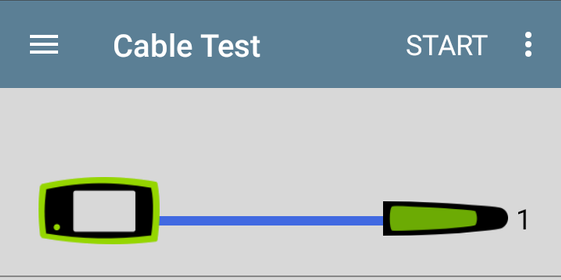
<ul dir=”ltr” style=”font-size: 13px; box-sizing: border-box; margin-top: 0; margin-bottom: 10.5px; font-style: normal; font-variant-ligatures: normal; font-variant-caps: normal; font-weight: 400; letter-spacing: normal; orphans: 2; text-indent: 0; text-transform: none; widows: 2; word-spacing: 0; white-space: normal; text-decoration-style: initial; text-decoration-color: initial; background-color: rgba(255, 255, 255, 1); border: 0; color: rgba(0, 0, 0, 1); font-family: “Trebuchet MS”, Helvetica, sans-serif; list-style-position: inside; m